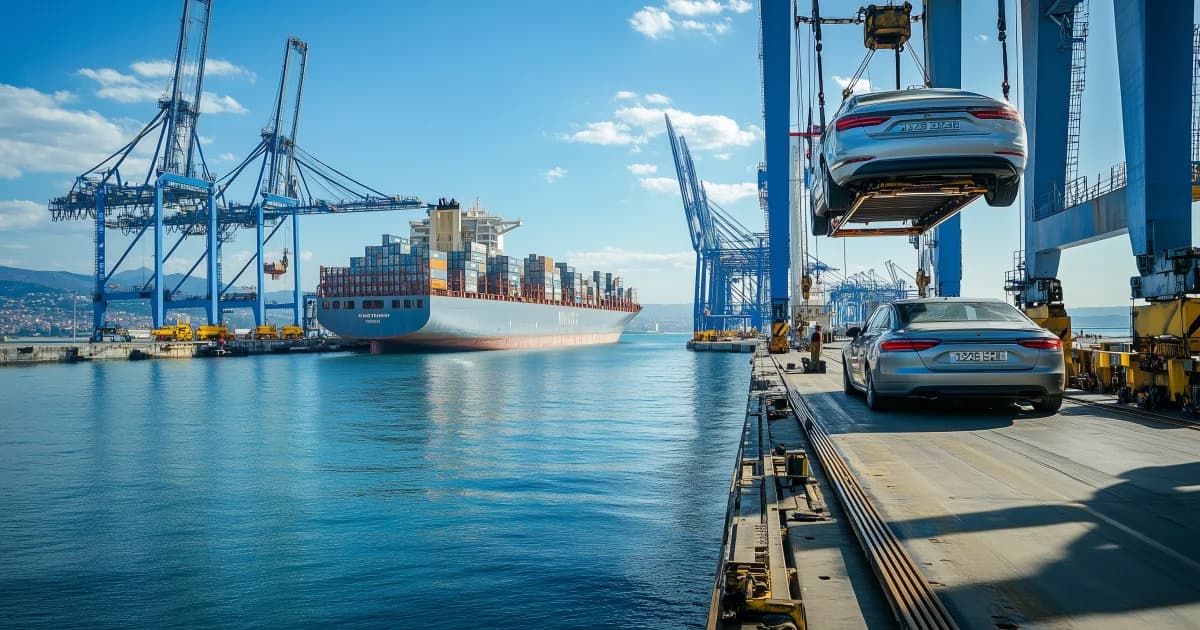
Importing a car from Europe to Morocco is something many Moroccans living abroad (MRE) and savvy buyers consider. Vehicle prices in Europe, especially in Germany, Belgium, and France, are often more attractive. But between customs duties, VAT, and homologation fees, the final calculation can hold surprises. Here's the complete guide for 2026.
Legal Notice: This guide is provided for informational purposes only. Customs procedures, tariffs, and import regulations in Morocco may change. For official procedures, always consult authorized sources: ADII / Customs Administration, NARSA, and the Official Bulletin. When in doubt, seek assistance from a licensed customs broker or qualified professional.
Who Can Import a Car to Morocco?
Moroccans Residing Abroad (MRE)
MRE benefit from a special regime upon their permanent return to Morocco:
- Partial customs duty exemption on a personal vehicle (source: ADII)
- Condition: the vehicle must have been registered in the MRE's name for at least 6 months before returning (according to current customs regulations)
- The vehicle cannot be sold for 5 years after import (otherwise, full duties apply retroactively)
Moroccan Residents
Any Moroccan resident can import a vehicle, but without tax advantages. Full customs duties and taxes apply.
Detailed Import Costs
1. Customs Duties
Customs duties in Morocco are calculated on the customs value of the vehicle (purchase price + transport + maritime insurance). The rates below are indicative; consult the official tariff at douane.gov.ma for current rates.
| Vehicle Type | Customs Duty Rate | | --------------------- | ----------------- | | Petrol vehicle | 17.5% | | Diesel vehicle | 17.5% | | Hybrid vehicle | 10% | | 100% electric vehicle | 2.5% |
Source: Customs and Indirect Taxation Administration (ADII)
2. Value Added Tax (VAT)
VAT of 20% is applied on the customs value + customs duties (source: ADII). This cascading calculation significantly increases the cost.
3. Eco-Tax
Since 2023, an environmental tax has been applied based on CO₂ emissions. Amounts vary according to schedules published in the Official Bulletin. Consult sgg.gov.ma for current rates.
| CO₂ Emissions | Tax | | -------------- | ---------- | | Under 120 g/km | 0 MAD | | 121–160 g/km | 5,000 MAD | | 161–200 g/km | 15,000 MAD | | Over 200 g/km | 30,000 MAD |
Indicative amounts — verify current tariff.
4. Transport Costs
| Method | Estimated Cost | Duration | | ------------------------------------ | ---------------- | --------- | | Ro-Ro ferry from Spain | 3,000–5,000 MAD | 1–2 days | | Container from Germany | 8,000–15,000 MAD | 5–10 days | | Road via Algeciras–Tangier ferry | 2,000–3,000 MAD | 1 day |
5. Homologation and Registration
- Technical homologation: 1,500–3,000 MAD (depending on complexity — NARSA)
- Technical inspection: 300 MAD (indicative rate)
- Moroccan registration (carte grise): 800–1,500 MAD (varies by fiscal power — NARSA)
- License plates: 200 MAD
- Customs broker (optional but recommended): 2,000–5,000 MAD
Complete Cost Example
Let's take a Volkswagen Golf 8 1.5 TSI purchased in Germany:
| Item | Amount | | --------------------------- | ----------------------- | | Purchase price in Germany | 150,000 MAD (≈ €14,000) | | Transport (Ro-Ro via Spain) | 4,000 MAD | | Maritime insurance | 1,000 MAD | | Customs value | 155,000 MAD | | Customs duties (17.5%) | 27,125 MAD | | VAT (20% on value + duties) | 36,425 MAD | | Eco-tax (140 g/km) | 5,000 MAD | | Homologation + registration | 3,000 MAD | | Customs broker | 3,000 MAD | | Total cost in Morocco | 229,550 MAD |
Conclusion: The Golf bought for €14,000 in Germany ends up costing approximately 229,550 MAD in Morocco. The same new Golf in Morocco costs about 280,000 MAD. The saving is approximately 50,000 MAD — significant, but at the cost of substantial administrative effort.
Step-by-Step Procedure
Step 1: Choose the Vehicle (in Europe)
- Verify the model is homologable in Morocco
- Prefer vehicles with a complete service history
- Avoid vehicles over 5 years old (compliance costs increase)
- Ensure the vehicle has a European Certificate of Conformity (COC)
Step 2: Prepare Documents
- Purchase invoice (or sales contract)
- European registration document
- Certificate of Conformity (COC)
- No-lien certificate from the country of origin
- Valid European technical inspection
- Passport and CIN of the owner
Step 3: Transport to Morocco
The most economical method is the Ro-Ro ferry from Algeciras (Spain) to Tanger Med. Crossing time: approximately 1 hour.
Step 4: Customs Clearance
- Customs declaration (DUM form)
- Physical vehicle inspection
- Payment of duties and taxes
- Obtaining the fiscal receipt
Tip: Use a licensed customs broker. For 2,000–5,000 MAD, they handle all the paperwork and help you avoid costly mistakes.
Step 5: Homologation and Registration
- Technical inspection at an authorized center
- Homologation by the Ministry of Transport
- Registration at the registration center (Moroccan carte grise)
- Mandatory insurance before driving
Import vs Local Purchase: Which Is Better?
| Criteria | Import from Europe | Buy Locally | | ------------- | -------------------------------- | ------------------------------ | | Price | Often cheaper (if > 200,000 MAD) | More expensive but hassle-free | | Paperwork | Complex (2–4 weeks) | Simple (1–2 days) | | Warranty | None | Possible at dealership | | Selection | Very wide | Limited to local market | | History | Verifiable (Carfax, TÜV) | Sometimes opaque |
Our recommendation: Import is worthwhile for vehicles valued over 200,000 MAD, where the 15–25% savings justify the effort. Below that, fixed costs (transport, broker, homologation) significantly reduce the advantage.
Scams to Avoid
- Unlicensed brokers: always verify your customs broker is officially authorized
- Stolen vehicles: check the chassis number on European databases (Eucaris)
- Clocked odometers: request TÜV history (Germany) or CT records (France)
- Seriously damaged vehicles: German HU/AU reports are very detailed
- Inflated broker fees: calculate duties yourself before handing over money
Conclusion
Importing a car from Europe to Morocco can be an excellent deal, provided you calculate all costs carefully and follow the procedure rigorously. For high-end vehicles, savings can reach 50,000–100,000 MAD. If you'd rather skip the hassle, browse MaroDrive: many recent, imported, and customs-cleared used vehicles are available at competitive prices.
Important Reminder: This article is provided for informational purposes only and does not constitute legal or tax advice. Procedures and tariffs may change. Always consult official sources (ADII, NARSA, Official Bulletin) before undertaking any import procedure.