
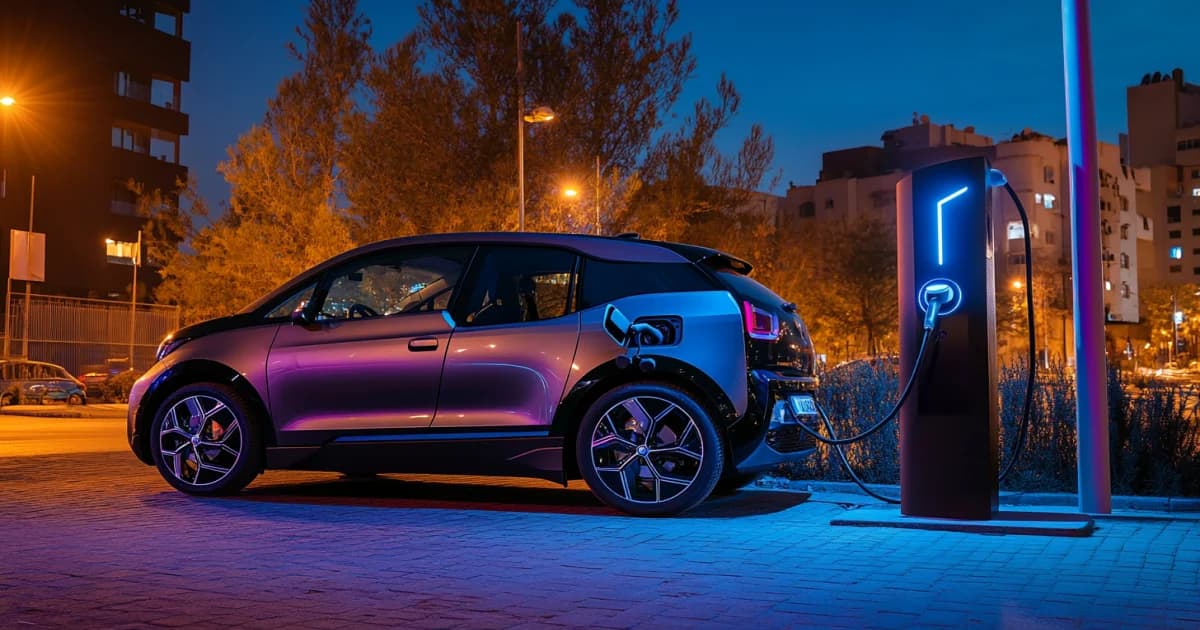
Morocco, the first African country to host COP22 in Marrakech in 2016, has strong ambitions for sustainable mobility. In 2026, the electric vehicle landscape in Morocco is evolving rapidly, with growing charging infrastructure and new models tailored to the local market.
Market Overview in 2026
Key Figures
The electric vehicle market in Morocco remains modest compared to Europe, but growth is significant:
- Total vehicle fleet: approximately 4.5 million vehicles
- Electric and hybrid vehicles: approximately 15,000 units (0.3% of fleet)
- Annual EV sales growth: +45% in 2025
- Public charging stations: approximately 350 charging points nationwide
Why Morocco Is Well Positioned
Morocco has natural advantages for electromobility:
- Abundant renewable energy: the Noor solar complex in Ouarzazate, wind farms in Tarfaya and Tangier → competitively priced green electricity
- Moderate urban distances: 80% of daily trips are under 50 km
- Political will: national sustainable mobility strategy integrated into Vision 2030
- Electricity cost: approximately 1.30 MAD/kWh vs 12–14 MAD/liter of gasoline
Available Models in Morocco
Affordable Segment (under 250,000 MAD)
| Model | Range | Estimated Price | Highlights | | ---------------- | ------ | --------------- | ------------------------------------------------ | | Dacia Spring | 230 km | 180,000 MAD | Cheapest on the market, perfect for city driving | | MG4 Standard | 350 km | 240,000 MAD | Good range-to-price ratio | | BYD Dolphin | 420 km | 230,000 MAD | Excellent range, fast-growing brand |
Mid-Range Segment (250,000–450,000 MAD)
| Model | Range | Estimated Price | Highlights | | ------------------- | ------ | --------------- | ------------------------------------ | | Tesla Model 3 | 510 km | 420,000 MAD | Benchmark, Supercharger network | | BYD Atto 3 | 420 km | 320,000 MAD | Compact SUV, well equipped | | Hyundai Ioniq 5 | 480 km | 400,000 MAD | Stunning design, ultra-fast charging |
Premium Segment (over 450,000 MAD)
| Model | Range | Estimated Price | Highlights | | ----------------- | ------ | --------------- | --------------------------------- | | Tesla Model Y | 530 km | 500,000 MAD | Family SUV, wide charging network | | BMW iX3 | 460 km | 650,000 MAD | Luxury meets BMW heritage | | Mercedes EQC | 420 km | 700,000 MAD | Mercedes comfort and prestige |
Charging Infrastructure
The Current Network
Morocco's charging network is developing along three main axes:
- Highways: ADM (Autoroutes du Maroc) has installed fast chargers at major service areas (Tangier–Agadir, Casablanca–Fès, Casablanca–Marrakech corridors)
- Shopping centers: Morocco Mall, Anfa Place, Marjane, Carrefour — 22 kW chargers available while you shop
- Hotels and riads: increasingly offering charging, especially in Marrakech and Essaouira
Charging Costs
| Charging Type | Estimated Cost | Time (0–80%) | | ------------------------- | ---------------------- | ------------ | | Home (overnight) | 15–25 MAD for 300 km | 6–8 hours | | Public (22 kW) | 40–60 MAD for 300 km | 2–3 hours | | Fast charger (50+ kW) | 80–120 MAD for 300 km | 30–45 min | | Tesla Supercharger | 100–150 MAD for 300 km | 20–30 min |
Compared to gasoline: traveling 300 km in a petrol car costs approximately 250–350 MAD. Home charging saves 60–80%.
Running Costs: Petrol vs Electric
Annual Cost for 15,000 km
| Item | Petrol Car | Electric Car | | ----------------------- | -------------- | -------------- | | Fuel / electricity | 12,000 MAD | 2,500 MAD | | Maintenance | 3,500 MAD | 1,200 MAD | | Insurance | 4,000 MAD | 4,500 MAD | | Road tax (vignette) | 700 MAD | 0 MAD (exempt) | | Annual total | 20,200 MAD | 8,200 MAD |
Annual savings of approximately 12,000 MAD, which pays back the purchase premium in 5–7 years.
Tax Incentives in Morocco
The Moroccan government has implemented several measures to encourage EV adoption:
- Road tax exemption for 100% electric vehicles
- Reduced customs duties on EV imports (2.5% instead of 17.5%)
- Reduced VAT on residential charging stations
- IRESEN subsidies for public charging infrastructure
Challenges to Overcome
Range in Moroccan Conditions
Heat reduces battery range by 10–15% in summer. A vehicle rated for 400 km will deliver approximately 340–360 km during a Moroccan summer. Additionally, intensive AC use consumes extra energy.
Charging Network Outside Major Routes
Outside the Tangier–Casablanca–Marrakech–Agadir corridor, charging stations remain scarce. Trips to mid-sized cities (Béni Mellal, Errachidia, Ouarzazate) require careful planning.
Purchase Price
Despite savings in running costs, the upfront price remains a major barrier. The average Moroccan salary makes EV access difficult for most. Chinese brands (BYD, MG) are starting to democratize the market.
Our Verdict: Should You Go Electric in Morocco in 2026?
Yes, if:
- You drive mainly in cities or along the main highway corridor
- You can charge at home (garage or private parking)
- You drive more than 15,000 km/year (savings justify the investment)
- You're looking for a recent used EV (Tesla Model 3, BYD) on MaroDrive
Not yet, if:
- You regularly travel to rural areas without charging stations
- You don't have a home charging point
- Your budget is under 180,000 MAD
Conclusion
Morocco is making great strides toward electric mobility. Charging infrastructure is expanding, models are becoming more affordable thanks to Chinese brands, and running cost savings are real. If you're considering an electric vehicle, browse listings on MaroDrive for the best deals on the Moroccan market.